Mrs. Stewart's Class
  • Home
  • AT Geography & Field Research
    • AT Geo: Daily Agenda
    • Geography 101: Intro to Geography
    • Unit 1: Inequalities
    • Unit 2: Demographics
    • Unit 3: Agriculture, Food & Health >
      • Community Health Webquest >
        • Water-borne pathogens
        • Vector-Borne Diseases
        • Pandemics
    • Unit 4: Urban Realm
    • Fieldwork
    • Country Portfolios
    • Geography Careers & Programs
  • World History 9
    • Daily Agenda - WH9
    • Unit 0: Thinking Like a Historian
    • Unit 1: Foundations of Civilizations
    • Unit 2: Revolution
    • Unit 3: Conflict
    • Unit 4: Globalization & Global Issues >
      • World History Voices Project - Students Digital Products
  • Social Studies/History Resources
  • AP Human Geography
    • Daily Agenda-APHG
    • APHG Unit 1: Geography: Nature & Perspectives
    • APHG Unit 2: Population & Migration
    • APHG Unit 3: Culture
    • APHG Unit 4: Political Geography
    • APHG Unit 5: Agriculture & Rural Land Use
    • APHG Unit 6: Industrialization & Economic Development
    • APHG Unit 7: Cities & Urban Land Use
    • APHG Exam Review
  • Free Time & Games
  • Current Events & Global Issues
  • About
  • Contact

APHG - Daily agenda (2018-2019)

IASAS (Go Eagles!) + "Future of Farming" Prep

1/31/2019

0 Comments

 
Picture
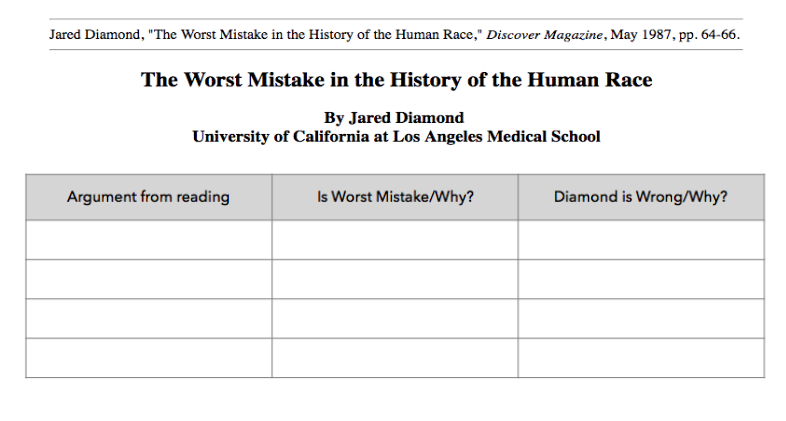
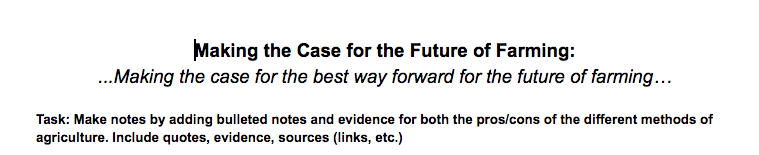
There is a document dropped into your APHG Drop Folder to take notes on the various types and methods of farming in the 21st Century. Please record your notes about the advantages and disadvantages to them. There is a long list of suggested videos (some of which you've seen already) you can use. You can also add from notes you may have already taken from chapter readings or notes from class.   

Be aware that this document (Pros/Cons notes) will be part of the Unit 5 Binder Check.

HOMEWORK PREP...
Also, there will be a Formative MCQ at the start of next class (Feb. 7 for A blocks; Feb. 8 for B block).  Be sure you have reviewed the MCQ HINTS and you have looked at some of the terms in Fouberg that were part of homework earlier this week.​

The "Debate" (really, its a discussion--or very informal debate) will take place after the formative MCQ.  Formative FRQs will also be returned to you next class.
0 Comments

21st century agriculture (cont.)

1/25/2019

0 Comments

 
After today's Formative FRQ we will continue to look at and discuss a variety of agricultural practices in the 21st Century.

Today we will look at feeding a world of 7+ billion people, who are (as a result of moving out of poverty and into middle class) are consuming more beef and fish. We will look at how we are currently meeting these increasing demands and the implications this has on agricultural practices. 

Helpful Links for Today's Class:
  • Food for Thought -  Feeding the Global Family (reading, 2008)
  • Unit 5 - Agriculture (Rubenstein) Lecture Slides
  • Factory Farming Map (Interactive)

The Slick & Sick Fight between Agribusiness & Sustainable Farming over the Future of Farming & Our Food:​​​
  • Chipotle Ad Review - Positive 
  • Chipotle Ad Scathing Review article

HW: Read Fouberg CH. 11; pay attention to vocab!

Read through Fouberg CH. 10 on Agriculture and Rural Land Use.
  • You can skip most of the first section on the origins of agriculture--its pretty much the same as Rubenstein.
  • Pay attention to any vocabulary terms not covered in Rubenstein (such as metes-and-bounds and long-lots).
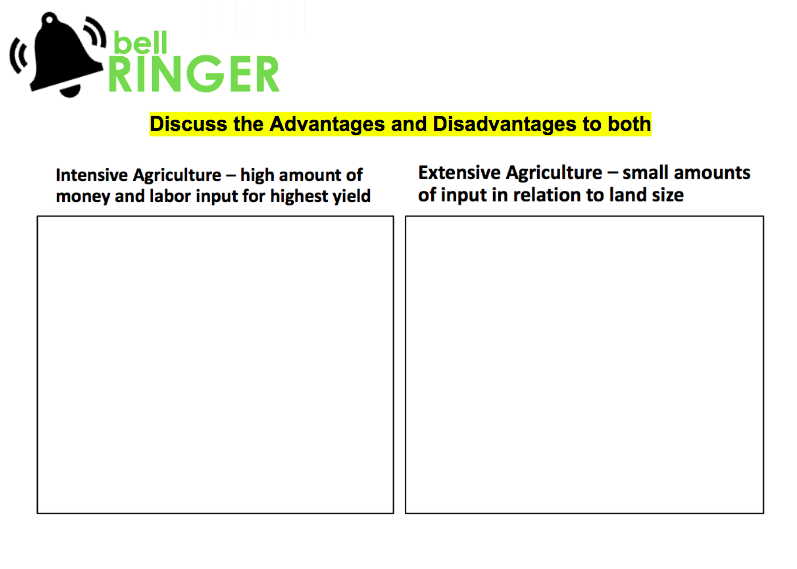
  • Be sure to pay attention to the section on the imprint that agriculture makes on the cultural landscape.  You will need to know this for the formative MCQ and for summatives (and the AP Exam).
  • Also study world climate maps. Be familiar with how this impacts types of agriculture and crops cultivated.
  • Read about cash crops, drug crops, luxury crops.
  • Read about food deserts. Know what they are and how this affects people in poverty within cities.
0 Comments

Agriculture in the 21st century

1/23/2019

0 Comments

 
Picture
Today: 
we will focus on the various farming practices and trends in agriculture we see in many places around the world--which are often in direct opposition to one another in their viewpoint on what direction farming and food production should be headed in for feeding the world in the future. 

We will also take a look at the various practices, including how Singapore gets its food, and begin looking with a critical lens at our options for food.

Helpful Links for Today's Class:
  •  Von Thunen Model
  • Amish vs. Industrial Farming​
  • Unit 5 - Agriculture (Rubenstein) Lecture Slides
  • Factory Farming Map (Interactive)​

HW: Prep for Formative FRQ.

See FRQ HINTS PPT

A Look Ahead at Next week--Woodlands Walkabout: next week we will step out into the Woodlands on Jan. 29th/30th to see what products we find in local supermarkets and wet markets serving the Woodlands community --and more importantly where this food comes from and the health and sustainability of this system we rely upon for our food here. We will also look at what is being grown locally within the community.​
0 Comments

the green revolution

1/21/2019

0 Comments

 
Today, after today's Kahoot quiz, we will take a look at farming in MEDCs.
  • Unit 5 - Agriculture (Rubenstein) Lecture Slides
  •  Von Thunen Model
  • Amish vs. Industrial Farming​

Later in class you will read an article, watch a couple some videos on each of the case studies and take notes.

For notes, Consider: 
  • What is the issue?
  • What is the source of the problem(s)?
  • Are there viable solutions?

Case Study 1: India: Seeds of Suicide
  1. Read Article: The Seeds of Suicide​
  2. Watch Videos:
  • ​​Video: Seeds of Suicide (Real Player, 12:50 min.) – make notes on the hardships/barriers the farmers face – RELATES TO FUTURE FRQ!!!
  • Video: Seed Freedom (Youtube, 2:28 min.)
  • Related Video:  Monsanto takes over farmer in Supreme Court (RT America, 2:52 min.)
  • Related Video: The World's Stashing Seeds in the Arctic -- just in case (Vox, 2017, 2:13 min.)
  • Optional Video: History of the Rise of Monsanto's Monopoly (Business Casual)
​
Case Study 2: USA: Urban Sprawl & Urbanization & Loss of Farmland
  1. Watch a few of the following videos on America's Concerns on Loss of Farmland and loss of young farmers (ones to prioritize are the ones in bold):
  • Puget Sound, Washington: "Our Farms, Our Future" (PCC Farmland Trust, 2017, 5:12min. )
  • Is America Facing a Farming Crisis? (NowThis, 2016, 4:27 min.) -- highlights the issue of not enough youth choosing a future career in farming
  • Urban Sprawl (Iowa Public Television, 2009, 7:59 min.)
  • Northern Colorado growth causing tensions, excitement about possibilities (2018, 4:49 min.)
  • Illinois Farmers Take Back the Land (Chicago Business Today, 2010, 2:12 min.)
  • Indiana: Fight or Flight? (PublicResource.org, 24:48 min.)
  • Related Video: Ontario Farmland Loss: "Ontario Farmland Forever" (Ontario Farmland Trust, 2017, 5:36 min.)
  • Related video: Losing paradise: Vientiane battles to control rapid expansion (Channel News Asia, 2017, 1:50 min.)

HW: Study Unit 5 vocabulary

Finish up the Case Studies & study for Unit 5 Formative Vocabulary Quiz next class.
​
Helpful Vocab Resources:
  • Unit 5 Vocab (50 terms with images)
  • ​Unit 5 Vocab (33 terms)
  • Unit 5 Vocabulary - Defined with specific examples

0 Comments

Jan 16/17: Agriculture in LEDCS vs. MEDCs

1/15/2019

0 Comments


Today we will be looking at Key Issues1, 2 & 3 (Rubenstein):
Key Issue 1: Where did agriculture originate?

Key Issue 2: Why do people consume different foods?
Key Issue 3: Where is agriculture distributed?
Helpful Resources for Today's Class:
  • Unit 5 - Agriculture (Rubenstein) Lecture Slides
​

HW: Finish reading Rubenstein Ch. 9 (key questions 3+4)

  • CH. 9, Key Issue 3 (PDF)
  • ​CH. 9, Key Issue 4 (PDF)
    • ​​note: Key Issue #4 of the 12th edition is really different from the old edition. Be sure you are familiar with this! ​
Also helpful once you finish reading the chapter... review your understanding of the different types of agriculture:
Types of Agriculture and Farming Practices (Slideshare review video)
0 Comments

Jan. 14/15: Intro to Unit 5: Agriculture & Rural land use

1/14/2019

0 Comments

 
Today you will be given back your MCQ & FRQ results from the Semester 1 Exam. 

We will begin to discuss Unit 5 on Agriculture. 

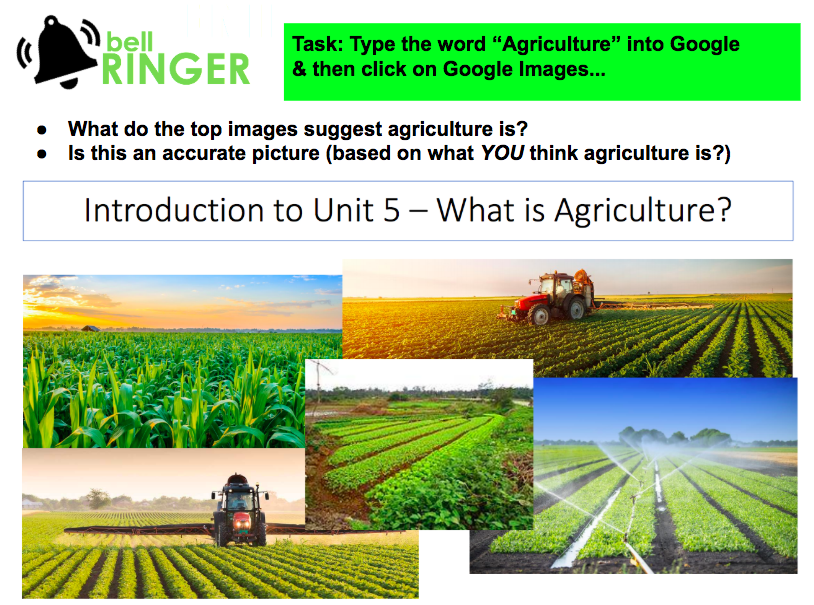
Today's class will focus on an overview of the 3 agricultural revolutions, primarily focusing on the first one (Neolithic Revolution) and the origins of agriculture. We will end today's class with a brief look at some of the challenges we face in the current agricultural revolution and the challenges it poses.
Picture
Helpful Resources for today's class:​
  • ESRI Agriculture Land Use Activity - PDF      
  • Student Template - Google Doc ​
  • Top Agricultural producing countries - website
  • Unit 5 - Agriculture (Rubenstein) Lecture Slides
  • Jared Diamond's article, "The Worst Mistake in the History of the Human Race"
Picture

HW: Begin reading Rubenstein CH. 9 Agriculture

Read Chapter 9 in Rubenstein textbook.
Use the study guide provided and fill out the study guide as you read.
0 Comments

    Note to Students:

    ​Bookmark this page so that you can keep up with what is covered in class (esp. if you are absent).

    Archives

    May 2019
    April 2019
    March 2019
    February 2019
    January 2019
    December 2018
    November 2018
    October 2018
    September 2018
    August 2018

    Categories

    All

    RSS Feed

Proudly powered by Weebly
  • Home
  • AT Geography & Field Research
    • AT Geo: Daily Agenda
    • Geography 101: Intro to Geography
    • Unit 1: Inequalities
    • Unit 2: Demographics
    • Unit 3: Agriculture, Food & Health >
      • Community Health Webquest >
        • Water-borne pathogens
        • Vector-Borne Diseases
        • Pandemics
    • Unit 4: Urban Realm
    • Fieldwork
    • Country Portfolios
    • Geography Careers & Programs
  • World History 9
    • Daily Agenda - WH9
    • Unit 0: Thinking Like a Historian
    • Unit 1: Foundations of Civilizations
    • Unit 2: Revolution
    • Unit 3: Conflict
    • Unit 4: Globalization & Global Issues >
      • World History Voices Project - Students Digital Products
  • Social Studies/History Resources
  • AP Human Geography
    • Daily Agenda-APHG
    • APHG Unit 1: Geography: Nature & Perspectives
    • APHG Unit 2: Population & Migration
    • APHG Unit 3: Culture
    • APHG Unit 4: Political Geography
    • APHG Unit 5: Agriculture & Rural Land Use
    • APHG Unit 6: Industrialization & Economic Development
    • APHG Unit 7: Cities & Urban Land Use
    • APHG Exam Review
  • Free Time & Games
  • Current Events & Global Issues
  • About
  • Contact