What is the difference between an epidemic and a pandemic?
The following is an excerpt from Health.com that helps explain the distinctions:
"That word—pandemic—is enough to induce widespread panic, and with good reason: According to the World Health Organization (WHO), a pandemic is the worldwide spread of a new disease. "A pandemic is when an epidemic spreads between countries," says David Jones, MD, PhD, a professor of the culture of medicine at Harvard University. In the grand scheme of things, a pandemic is the highest possible level of disease, or a measure of how many people have gotten sick from a particular disease and how far it has spread—but before a common illness reaches pandemic proportions, it has to exceed a few other levels, according to the Centers for Disease Control and Prevention (CDC):
"That word—pandemic—is enough to induce widespread panic, and with good reason: According to the World Health Organization (WHO), a pandemic is the worldwide spread of a new disease. "A pandemic is when an epidemic spreads between countries," says David Jones, MD, PhD, a professor of the culture of medicine at Harvard University. In the grand scheme of things, a pandemic is the highest possible level of disease, or a measure of how many people have gotten sick from a particular disease and how far it has spread—but before a common illness reaches pandemic proportions, it has to exceed a few other levels, according to the Centers for Disease Control and Prevention (CDC):
- Sporadic: When a disease occurs infrequently and irregularly.
- Endemic: A constant presence and/or usual prevalence of a disease or infection within a geographic area. (Hyperendemic, is a situation in which there are persistent, high levels of disease occurrence.)
- Epidemic: A sudden increase in the number of cases of a disease—more than what's typically expected for the population in that area.
- Pandemic: An epidemic that has spread over several countries or continents, affecting a large number of people."
Pandemics: How Diseases Spread Globally
TASK:
Watch the following 8-minute TED-Ed video for an overview of pandemics:
Watch the following 8-minute TED-Ed video for an overview of pandemics:
TASK:
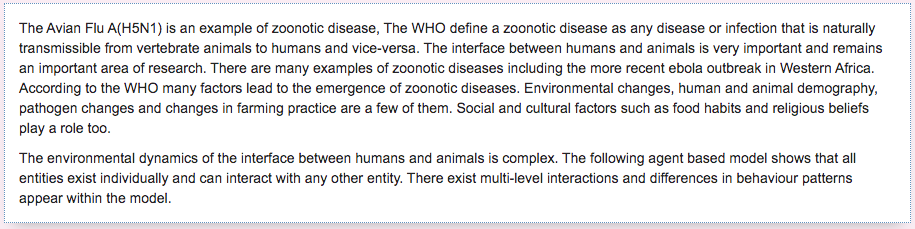
Study the models below and suggest what it tells us about the dangers of diseases like avian flu. How do you think humans come into contact with different animal pathogens?
Study the models below and suggest what it tells us about the dangers of diseases like avian flu. How do you think humans come into contact with different animal pathogens?
CHOOSE YOUR
COMMUNICABLE DISEASE !!!
In the section below, there are several different types of pandemics of communicable (contagious) diseases.
You can choose which case study you would like to focus on. Complete the task for the case study you select.
You can choose which case study you would like to focus on. Complete the task for the case study you select.
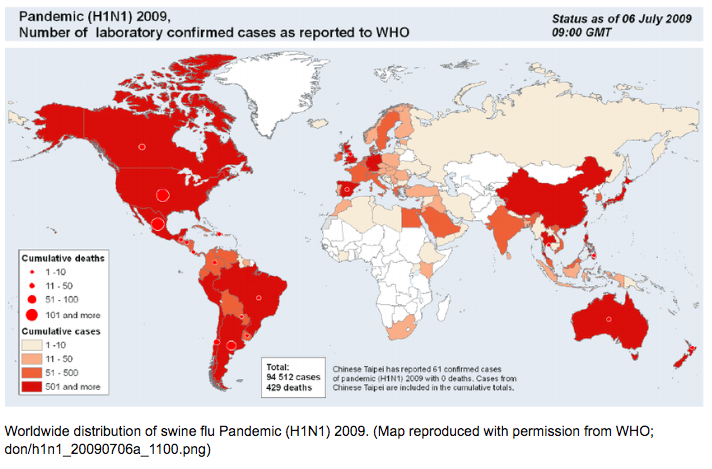
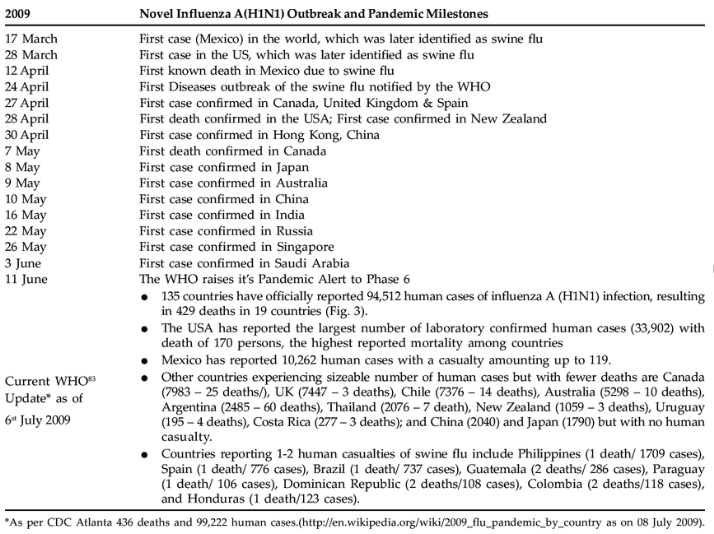
Option #1: Pandemic Case Study: H1N1 "Swine Flu"
|
TASK:
|
|
The following is information on the 1918 H1N1 Influenza outbreak, which became a pandemic:
|
Trivia Question: Which killed more people--WWI, ‘The Great War’ of 1914-1918 --or-- ‘Spanish Flu' of 1918?
|
|
Option #2: Pandemic Case Study: Avian Flu
|
TASK:
Watch the following 1-minute video clip which shows how Google Earth is being used to map and model the spread of avian flu.
|
TASK:
Watch the following 2-minute video clip from Defra on the responses on the UK to the discovery of avian flu in the UK and make notes on the advice being given |
TASK:
Use the interactive bird flu map from BBC to explore the spread of avian flu since 2003.
Describe the pattern of deaths between 2003 and 2007 and discuss the risk to human health
Use the interactive bird flu map from BBC to explore the spread of avian flu since 2003.
Describe the pattern of deaths between 2003 and 2007 and discuss the risk to human health
Option #3: Pandemic Case Study: Ebola
|
TASK:
|
|
FYI: Information on the novel coronavirus (a.k.a. "Wuhan virus")
- Singapore government - Updates on Wuhan Coronavirus (MOH.gov.sg)
- Coronavirus (European Centre for Disease and Control)
- CDC: novel coronavirus facts, myth-busting, etc.
|
|
|
Bonus Material: Pandemic Films that will Frighten You
|
If you have run out of things to binge-watch on Netflix, give this documentary series a try -- its alarming but highly educational.
|
Here is the trailer for an oldie, <<2011>>but goodie movie (if you like scaring yourself). It has some great actors.
|